Composite Joists
Build efficient multi-story steel structures with superior strength-to-weight ratios
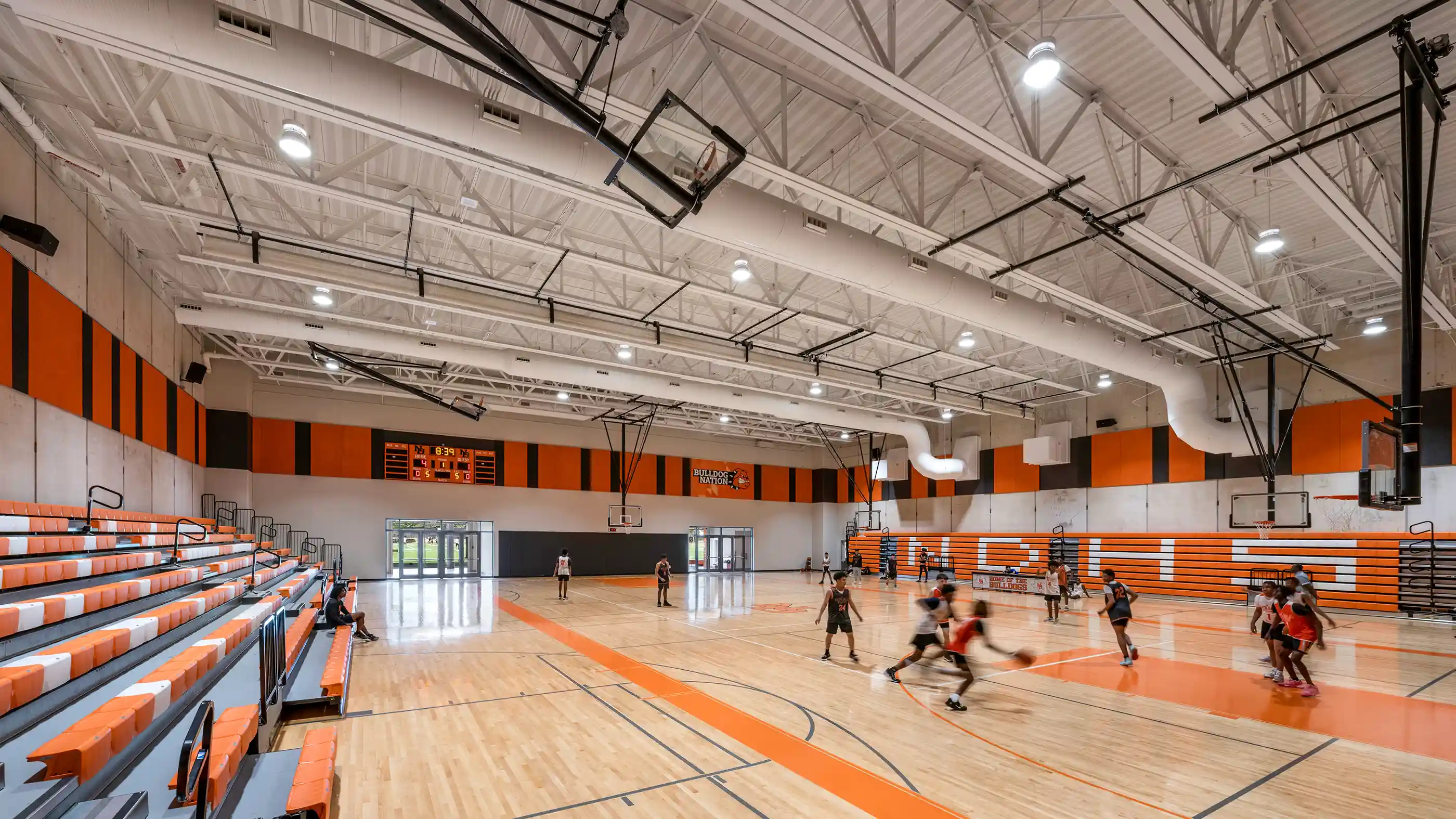
Massive composite joists span 116 feet, topped with a cellular acoustical composite floor deck in this hybrid storm shelter gymnasium.
Composite joists are engineered for longer spans and leaner floors
Composite Joists (CJ-Series) provide vibration performance characteristics equivalent to wide-flange beams, while enabling much greater span design capabilities than wide-flange beams. When you factor in faster lead times, reduced project weight, and MEP pass-through potential, composite joists are a superior alternative to conventional structural steel framing with wide-flange beams. The increased strength-to-weight ratios, enhanced stiffness, and cost-effectiveness make composite joist floor systems ideal for multi-story steel construction projects.


CJ-Series composite steel joists reduce steel tonnage
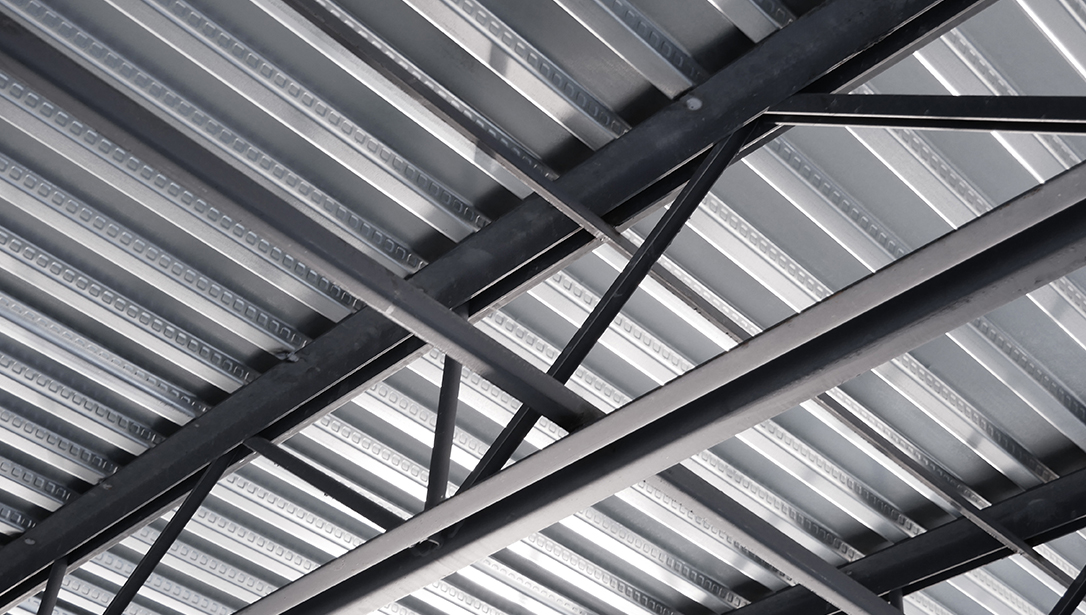
Composite joists function integrally with the concrete slab above to form a unified load-resisting system. This composite behavior is achieved through the installation of shear studs, which are welded through the composite steel floor deck to the top chord of the steel joist. Once the concrete is poured and cured, the studs become embedded in the slab, allowing it to act compositely with the steel joist and share in resisting applied loads.
This combination significantly reduces the demand on the composite steel joist alone, allowing for a smaller top chord section and reducing overall steel tonnage. Additionally, composite joists can be spaced further apart, reducing material, fabrication, shipping, and installation costs. The resulting shallower floor depth increases headroom and offers greater flexibility for routing mechanical, electrical, and plumbing (MEP) systems through the joist web openings.
Versatile integration with supporting structures
Composite joists can be designed to integrate with supporting structures in a variety of ways. The figures below illustrate two common connection types: the standard seat connection (Figure 1), which bears on the supporting beam, and the flush-frame connection (Figure 2), which aligns the joist’s top chord with the supporting beam for a more streamlined floor profile. These options provide flexibility to meet varying design and construction requirements.
Standard seat connection on composite joist

Flush-frame connection on composite joist

Benefits of composite joists
- Achieve extended spans with fewer steel joists and columns (Span-to-depth ratio up to 30:1 vs. 24:1 for non-composite)
- Maximize usable space by minimizing floor system depth
- Open-web joist configuration allows easy routing of mechanical, electrical, and plumbing systems
- Lower costs associated with materials, fabrication, and erection
- Stiffer floors reduce deflections and improve vibration characteristics
- Faster erection translates to quicker building enclosure and earlier occupancy
- Compatible with multiple types of framing, including structural steel, ICF, masonry, and more
Featured Projects