Standard Joists and Girders
The key components of your structural steel building system
The teamwork on our joist lines is a genuine point of pride for us, and it’s reflected in the quality and high-volume output of our steel joist production.
Engineered to reduce costs and project timelines
Standard steel joists and joist girders are key structural components for roofing and flooring systems. Our steel joists and girders are engineered and manufactured in accordance with the specifications of the Steel Joist Institute (SJI).
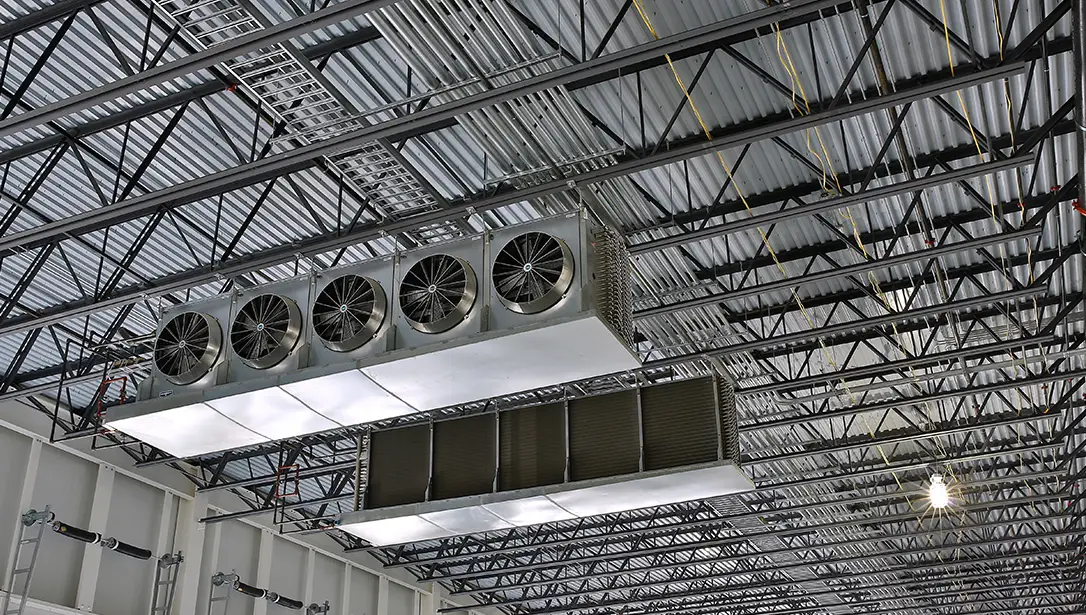
Steel joists and joist girders serve as primary framing members with simple spans to support concentrated loads for roofs and floors. Steel joists and girders enable easier and faster erection. In addition to reduced project weight, steel joists and girders introduce a range of cost and performance advantages, especially for multi-story construction applications. The open-web design of steel joists and joist girders allows for seamless integration of mechanical, electrical, and plumbing (MEP) systems.

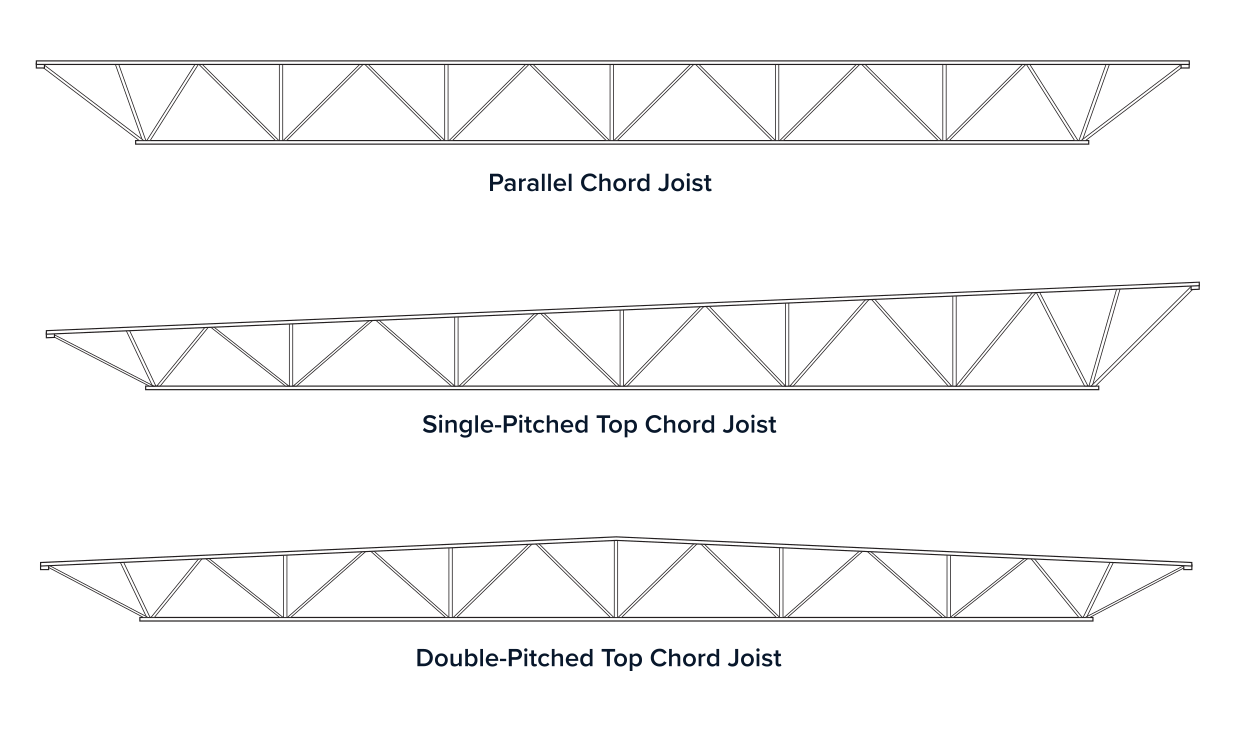
K-Series steel joists
- Depths from 10 to 30 inches and spans from 20 to 60 feet.
- Max span length is equal to twice the depth in inches. For example, a 20-inch-deep joist has a maximum span of 40 feet
- Top chords are designed to withstand axial force and local bending between panel points due to uniform loads
- Available as single- or double-pitched
LH-Series (long span) steel joists
- Depths from 18 to 48 inches and spans from 18 to 96 feet
- Types include parallel chord, single pitch, double pitch, and underslung- or bottom-chord bearing
- Available as single- or double-pitched
DLH-Series (deep long span) steel joists
- Depths of 52 to 120 inches and spans from 90 to 240 feet
- Capable of supporting uniform loads up to 1,750 pounds per linear foot (plf)
- Types include parallel chord, single pitch, double pitch, and underslung- or bottom-chord bearing
- Available as single- or double-pitched
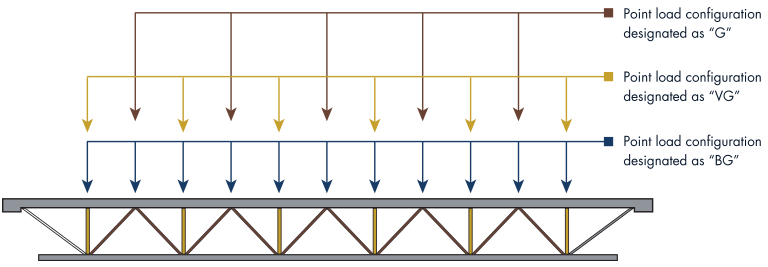
Joist girders are engineered to carry heavier, concentrated loads and efficiently transfer them to columns or primary supports.
- Depths from 20 to 120 inches and spans from 20 to 120 feet
- Available as single- or double-pitched
- G – The most common girder configuration, G allows for girder web openings to be adjacent to each joist location
- VG – This configuration allows for girder web openings to occur between each joist space
- BG – This configuration is typically utilized when girder depth (in) to joist spacing (in) ratio is 0.8 or greater
Alternative specification method
An alternate method of specifying standard K-Series, LH-Series, or DLH-Series joists is by providing the designation in a load/load sequence. TL is the total load in pounds per linear foot, and LL is the governing live load (Lr, L, S, R) in plf. Also, standard joists can be specified for SP. The SP load designation can be utilized to refer to a loading schedule or diagram. For guidance on specifying steel joists using this alternative method, contact a local steel joist expert.
Featured Projects